Enterprise AI Development Services: A Complete Guide for Businesses
Enterprise AI development services help big companies plan, build, and use their own AI solutions. These services include strategy, data engineering, model development, and integration.

Enterprise AI development services help big companies plan, build, and use their own AI solutions. These services include strategy, data engineering, model development, and integration. They help businesses automate tasks, make better decisions, and get ahead in all kinds of industries.
Artificial intelligence has gone from being a trendy term in the lab to a top priority in the boardroom. According to McKinsey's 2024 State of AI report, 72% of organizations have adopted AI in at least one business function, up from 55% just a year prior. Yet despite this momentum, many businesses still struggle to translate AI potential into tangible results.
That gap is where enterprise AI development services come in. Enterprise-grade AI solutions are custom made to meet the needs of large organizations in terms of complexity, scale, and security. These are different from off-the-shelf AI tools. For them to really help a business, they need careful planning, strict data management, and a lot of technical know-how.
Businesses, CTOs, and IT decision-makers can use this guide to learn everything they need to know, such as what enterprise AI development services really include, how to pick the best development partner, and how much the whole process will really cost.
What Are Enterprise AI Development Services?
End-to-end professional services that help businesses plan, build, integrate, and run AI-powered systems are known as enterprise AI development services. These services are made to meet the operational, compliance, and scalability needs of medium-sized to large businesses.
They typically cover:
AI strategy and consulting
Data engineering and building pipelines
Machine learning (ML) model design and training
Natural language processing (NLP) and computer vision solutions
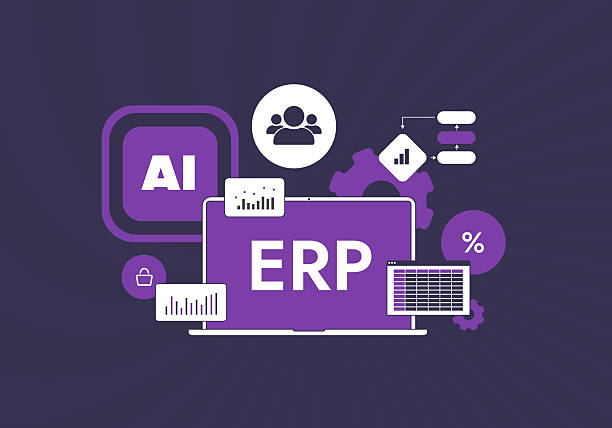
AI integration with existing enterprise systems (ERP, CRM, etc.)
Continuously checking and improving the model
There is a big difference between this and consumer AI tools. Enterprise AI development services are custom-built, not plug-and-play and that distinction matters enormously at scale.
Why Businesses Are Investing in Enterprise AI
No longer is the business case for corporate AI just an idea. According to a 2023 PwC study, AI could add up to $15.7 trillion to the world economy by 2030. Productivity gains and better products would be the main reasons for this.
For businesses in particular, three things are pushing them to invest in AI:
Competitive displacement Competitors who adopt AI faster can reduce costs, improve customer experience, and iterate more quickly.
Data overload Enterprises generate enormous volumes of data that human teams cannot process effectively without intelligent automation.
Workforce limitations: Companies are turning to AI-powered augmentation because they are short on skilled workers in engineering, operations, and analysis.
These aren't just theoretical worries. Right now, they're affecting decisions about how to spend capital.
Key Benefits of Enterprise AI Development Services
Custom enterprise AI creation is better than generic AI tools in a number of ways, including:
Scalability solutions are built to handle large amounts of data and a lot of users.
Security and compliance: When development teams start a project, they keep rules like HIPAA, GDPR, and SOC 2 in mind that are specific to the business.
System integration Custom AI integrates with legacy infrastructure, APIs, and enterprise software stacks.
Differentiation in the market: Competitors have a hard time copying proprietary AI capabilities.
More money back over time Custom solutions usually work better than general tools over the course of 3 to 5 years, even though they cost more up front.
Core Components of Enterprise AI Solutions
A fully developed business AI solution usually has several layers that work together:
Data infrastructure includes data lakes, pipelines, and preprocessing workflows that make sure AI models get clean, structured data.
ML and AI models Models that have been fine-tuned and specifically trained to do certain business chores.
APIs and layers for integrating them Middleware that adds AI features to business apps that are already in use.
Monitoring and governance Tools for tracking model performance, detecting drift, and keeping audit trails.
Dashboards, workflows, or built-in experiences that let end users connect with AI outputs are examples of user interfaces.
Popular Enterprise AI Use Cases Across Industries
Services for enterprise AI development are used in almost every industry:
Financial services Fraud detection, credit risk modeling, algorithmic trading, and regulatory compliance automation.
Healthcare: Help with making clinical decisions, analyzing medical images, sorting patients into groups, and speeding up the finding of new drugs.
Demand forecasting, personalized recommendations, inventory optimization, and dynamic pricing are all things that can be used in retail and online shopping.
Making use of predictive maintenance, computer vision for quality control, and supply chain optimization.
Human resources: Intelligent candidate screening, employee sentiment analysis, and workforce planning.
Customer service Conversational AI, ticket classification, and agent assist tools that lower resolution times.
The variety of these uses shows why enterprise AI development services are no longer just an IT project but an investment for many departments.
Technologies Used in Enterprise AI Development
AI solutions for businesses are based on a mix of new and old technologies, such as
Machine learning frameworks TensorFlow, PyTorch, and scikit-learn for model development.
These are some large language models (LLMs) that can be used for NLP and generative AI: GPT-4, Claude, Llama, and Mistral.
Cloud platforms like AWS, Microsoft Azure, and Google Cloud let you scale up or down your storage and computing needs.
MLflow, Kubeflow, and SageMaker are MLOps tools for managing the lifecycle of a model.
Big data handling can be done with Snowflake, Databricks, and Apache Spark.
The right technology stack relies on the organization's current infrastructure, how mature the data is, and the AI use cases that are being looked at.
How the Enterprise AI Development Process Works
Usually, these steps make up a structured enterprise AI development process:
Discovery and assessment Defining business objectives, evaluating data readiness, and identifying high-value AI use cases.
Data preparation Collecting, cleaning, labeling, and structuring data for model training.
Model development Building, training, and validating AI models against defined performance benchmarks.
Integration and testing Embedding AI into existing workflows and conducting user acceptance testing (UAT).
Deployment Launching in production with appropriate monitoring and rollback capabilities.
Optimization Continuously retraining models and refining outputs based on real-world feedback.
This process typically spans 3–12 months depending on complexity, data availability, and organizational readiness.
Challenges of Enterprise AI Implementation
Adopting AI in businesses isn't always smooth. Some common problems are:
Data quality problems Model success is hurt by bad, siloed, or inconsistently labeled data.
Organizational resistance: If employees aren't properly informed and trained, they may not want to change because of AI.
Integration complexity Connecting AI systems to legacy infrastructure often requires significant engineering effort.
Regulatory uncertainty Evolving AI regulations (including the EU AI Act) require ongoing compliance monitoring.
Talent gaps: The world still needs more skilled AI engineers, data scientists, and MLOps specialists.
To make deployment work, it's important to be aware of these problems early on and include ways to deal with them in the project plan.
Best Practices for Successful Enterprise AI Adoption
In order to successfully implement enterprise AI, companies usually stick to a set of rules:
Start with a clear use case instead of just being told to "use AI."
First, put money into data systems. AI systems are only as smart as the information they are given.
Set up rules for AI early on, such as rules for data privacy, model explain ability, and keeping an eye on bias.
Put together cross-functional teams with both technical and subject matter experts.
Measure outcomes against business KPIs, not just technical metrics like model accuracy.
How to Pick the Best Partner for Business AI Development
One of the most important decisions you'll make on your way to adopting AI is choosing an enterprise AI development partner. Use these factors to judge potential partners:
Domain expertise: Does the partner have a track record of working in your field?
Technical skills: Are they able to handle the whole development process, from data engineering to deploying models?
Scalability: Is their software built to handle growth at the enterprise level?
Security practices Do they follow SOC 2, ISO 27001, or similar security standards?
Communication and being open Do they explain technical choices in a way that your leadership team can understand?
Request case studies, speak with reference clients, and conduct technical assessments before committing to a development partner.
Enterprise AI Development Costs and Key Factors
The cost of developing AI for businesses depends a lot on the size and scope of the project. As a rough outline:
$25,000 to $100,000 for a proof of concept (POC).
$100,000 to $500,000 for a moderately complicated AI solution
Full-scale business AI platform: $500,000–$5M+
Data complexity, the number of AI models needed, the scope of the integration, the size of the team, and the commitments to ongoing maintenance are some of the main factors that affect costs. Organizations should also account for change management, training, and post-deployment optimization costs that are frequently underestimated.
Future Trends in Enterprise AI Development Services
The cost of developing AI for businesses depends a lot on the size and scope of the project.
AI agents that can plan, act, and make changes without constant human supervision are moving from research labs to real-world settings.
Multimodal AI models that can handle text, images, audio, and video all at the same time will open up new uses in media, manufacturing, healthcare, and more.
Smaller, specialized models Enterprises are increasingly fine-tuning smaller, domain-specific models rather than relying solely on large general-purpose LLMs reducing cost and improving accuracy.
Frameworks for governing AI As pressure from regulators grows, AI governance tools will become standard parts of corporate AI stacks.
Edge AI Processing AI workloads closer to the data source (rather than in the cloud) will become essential for applications that need to avoid latency and protect privacy.
Make AI that helps your business do things.
Enterprise AI development services represent a significant investment but for organizations that approach adoption strategically, the returns justify the commitment. The key is moving beyond the hype and focusing on real business problems, quality data, and the right development partners.
Start by identifying one high-value, well-scoped use case. Build a proof of concept. Measure outcomes rigorously. Then scale what works.
AI adoption is not a one-time project, it's an organizational capability that compounds in value over time. The enterprises that begin building that capability now will be the ones setting the pace in their industries five years from now.