
Best AI Construction Scheduling Software to Automate Project Timelines in 2026
AI construction scheduling software helps contractors manage project timelines, detect scheduling conflicts, predict delays, and coordinate resources more efficiently. Learn how automation can improve construction scheduling and reduce delay-related costs.
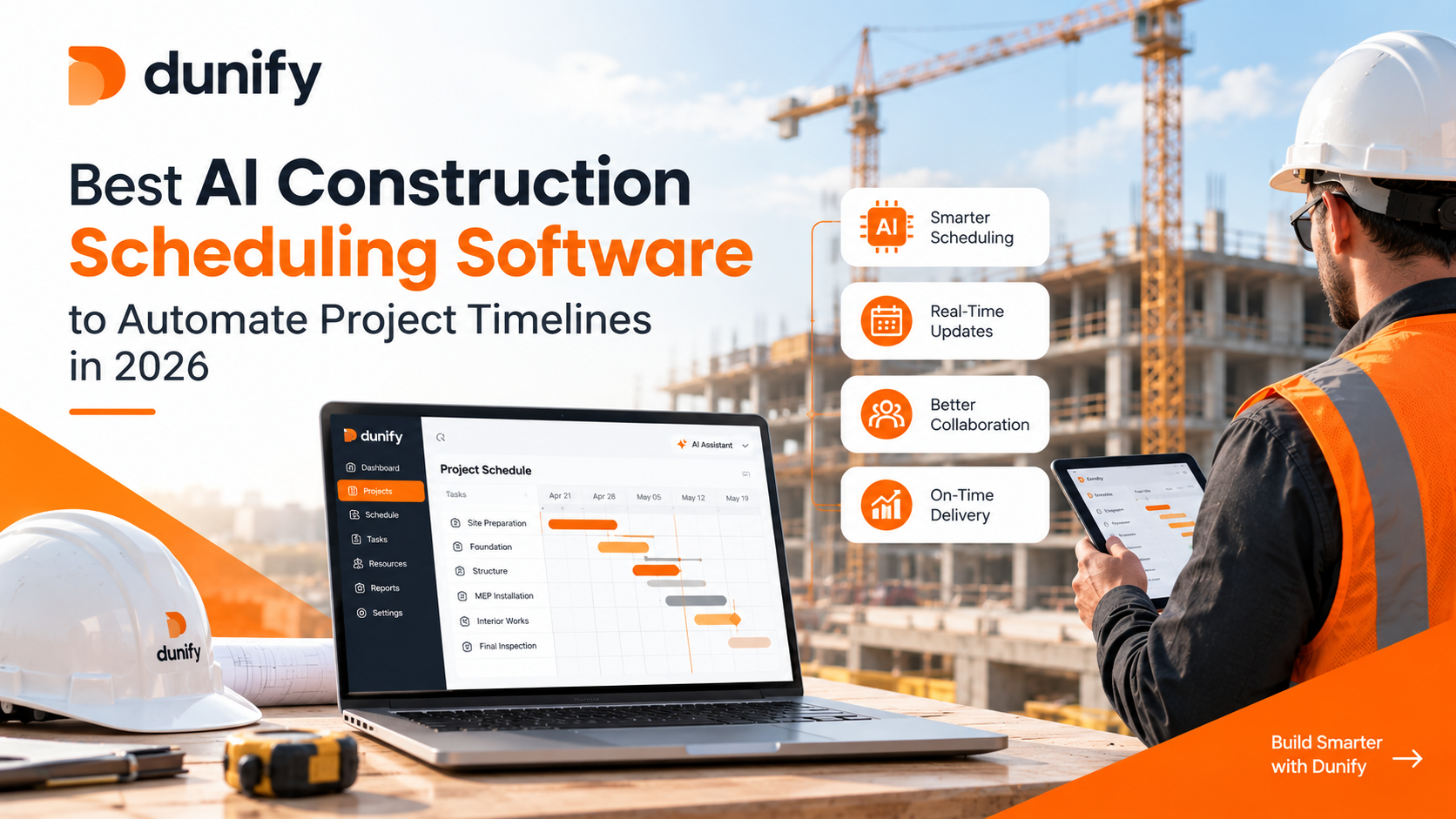
One late shipment, an unavailability of a crane operator, or an unplanned bad weather day can throw off the whole construction schedule, and on most job sites, no one sees until the effect has spread to three other trades. Scheduling has always been one of the most fragile parts of running a construction project. That's why more and more contractors and project managers are using AI to find scheduling conflicts early on, before they cause costly delays.
This is not about taking the place of the project manager's judgment. Giving them a system that can handle tens of thousands of moving parts, like crew availability, material supplies, weather forecasts, and permit deadlines, much more quickly than a spreadsheet or whiteboard ever could.
Why Traditional Construction Scheduling Falls Short
Most building schedules are still made and kept up to date with Gantt charts, spreadsheets, and other static tools that need to be updated by hand every time something changes. This causes problems that keep happening on busy job sites.
Once a schedule is made, it's no longer valid. When weather delays, material shortages, or problems with subcontractors start to pile up in week two, plans made at the beginning of the month rarely match up with what actually happens.
People don't notice resource problems until it's too late. When scheduling is done by hand across multiple spreadsheets or tools that are not linked, it is easy to miss booking the same crew twice or trades that overlap on the same workspace.
Without notice, delays pile up. Not only does a two-day delay in foundation work push that task back, but it can also move all tasks that depend on it further down the line, and manual plans don't always show this in real time.
Real money is lost on rework and idle work. When trades show up to a site that isn't ready for them or when crews have to wait for a delivery that is late, it costs the project money.
How AI Construction Scheduling Software Solves This
When a construction company buys AI construction scheduling software, it usually automates four tasks that used to be done by hand by the project manager:
Changes to the plan on the fly When there is a delay in any part of the project, the AI recalculates the due dates for tasks further down the line and lets you know which trades or supplies are affected.
Find resource conflicts There are no double bookings because the software checks crew assignments, equipment availability, and site access to make sure they don't happen.
Weather and risk forecasting: AI models use weather data and past project trends to see if there will be delays and let teams make plans ahead of time.
Dashboard view in real time Instead of a version that's out of date by the time it's printed or emailed, everyone involved, from site superintendents to subcontractors, sees a plan that is always up to date.
In this change, scheduling stops being a fixed document and turns into a living system that responds to real-time changes in the world.
Firms that make this shift usually see the biggest impact on multi-trade projects, where one delay used to mean hours of manual re-coordination across every subcontractor involved. If your current schedule updates take longer than the delay itself, it may be time to see how automation changes that. Talk to our team about how AI scheduling fits your next project.
A Real-World Example: How a Mid-Size General Contractor Cut Delay-Related Costs by 40%
A general contractor who was in charge of five commercial projects at the same time was manually updating schedules for each spot once a week on separate spreadsheets. It was usual for trades to miss dependencies on each other, and the team thought they were losing about 8–10 hours of work per project just fixing scheduling problems after they happened.
When they added AI-driven scheduling software to their project management platform, schedule conflicts were found immediately before crews were sent out, and when a delay was reported, task shifts further down the line were recalculated. Within a quarter, the contractor said that labor costs related to delays had gone down by 40% and that disagreements with subcontractors over missed coordination windows had become much less common. The project manager said that the software didn't completely get rid of delays; problems with the supply chain and bad weather still happened. But it cut down on the time it took for the team to figure out how a delay affected the rest of the plan.
What to Look for in AI Construction Scheduling Software
There are different levels of detail in the scheduling tools that are available. While weighing their choices, construction teams should put the following first:
The software should be able to work with the project management and project management system (PMS) tools you already have, so you shouldn't have to completely change how you do things.
Not just static Gantt charts; the value is in automatic changes further down the line, not just a nicer-looking form of the same manual chart.
Site superintendents need to be able to update schedules on their phones or tablets as well as in an office dashboard so that field teams can do so.
Historical data and reporting: Looking back at past project timelines helps make more accurate predictions and bids in the future.
Final Thoughts
Construction scheduling has always been a high-stakes balancing act, and manual tools are increasingly unable to keep pace with the number of variables involved in a modern project. Firms that adopt AI construction scheduling software aren't just avoiding delays they're building a system that catches problems while there's still time to act, rather than discovering them after a crew has already shown up to an unready site.
The pattern holds across industries: much like hotels that automate hotel booking management with AI to stay ahead of guest expectations, or warehouses that saw major gains after choosing to automate warehouse inventory with AI, the construction firms seeing the strongest results are the ones that start with a focused rollout on their highest-risk projects and scale from there.
Ready to see how AI can reduce delays and keep your projects on schedule? Contact us today for a free consultation and discover how AI-powered scheduling software can work for your next build.