How to Make a SaaS Platform That Can Grow in 2026
Learn how to build a scalable SaaS platform in 2026. Discover architecture tips, AI integration, and how international founders can use a US LLC to scale.
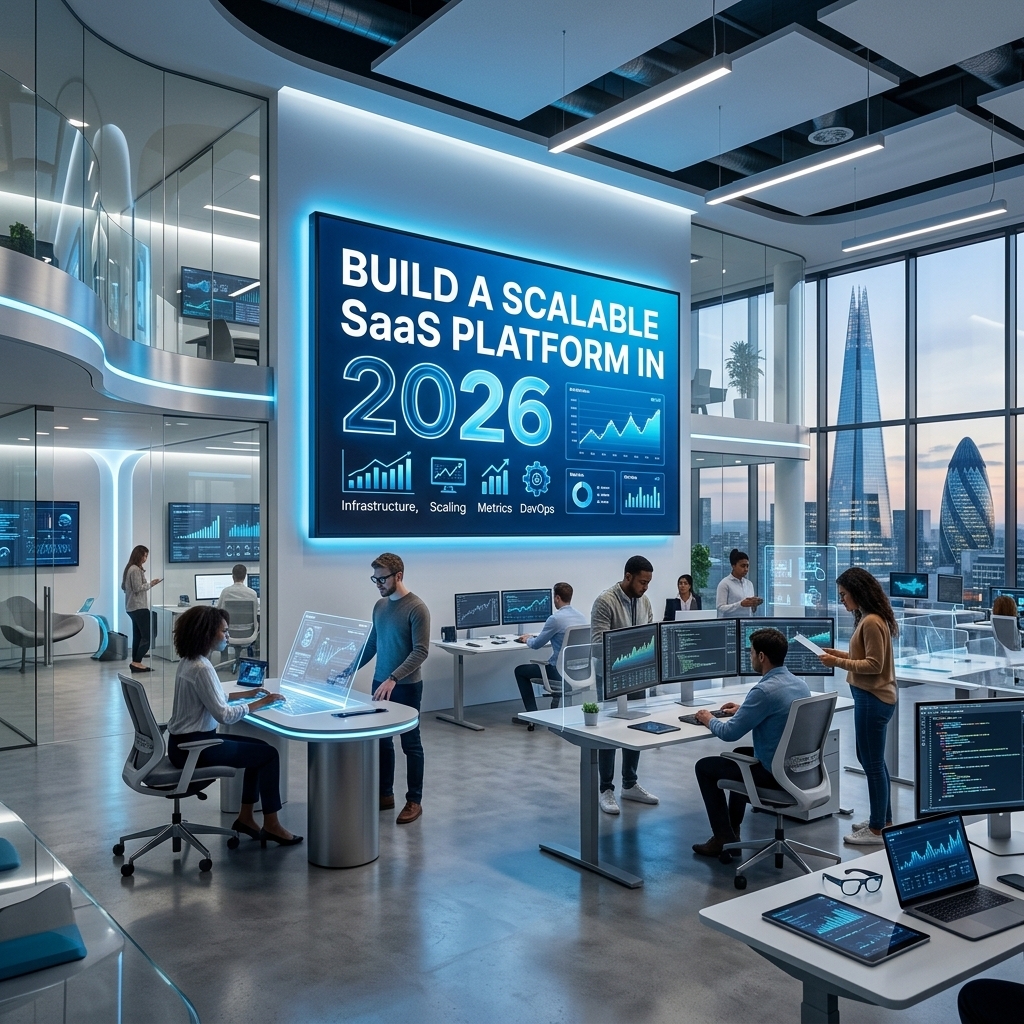
How to Make a SaaS Platform That Can Grow in 2026.
You need to build a scalable SaaS platform with microservices architecture, serverless computing and predictive AI load balancing in 2026. For international founders, scaling up means setting up a US LLC so they can legally use global payment systems like Stripe and keep international customer data safe.
The demand for global software is growing fast. If you're an entrepreneur outside the US starting a Software as a Service (SaaS) business, technological architecture is just half the story. You also need the correct business structure to process worldwide payments and safeguard your personal assets.
A cloud native infrastructure paired with a legally valid US corporate organization readies your software for quick, unhampered expansion. This book shows you step-by-step how to build your SaaS product and set up your business to grow over the next ten years.
Why does SaaS scalability matter for global startups in 2026?
The SaaS industry is heading toward expectations of very high performance. Users expect load times under a second and no downtime. If your platform goes down in the middle of a viral marketing spike, you lose income and trust. Scalability ensures that your system can take increasing demands without impacting user experience.
The ultimate basis for non-US residents developing abroad is a scalable platform supported by a US LLC. Your responsibility is protected by the LLC Your scalable tech stack takes care of the traffic.
What is the best core architecture for a scalable SaaS?
Monolithic architectures no longer meet the demands of modern software. If you want to grow well, you need to use modular frameworks.
Microservices: Separate your game into smaller, stand-alone services. You can scale that specific microservice without making a copy of the whole application if your payment handling module gets a lot of traffic.
Containerization: Use tools like Docker and Kubernetes. Containers package your code with all necessary dependencies, ensuring your SaaS runs consistently across any environment.
Serverless computing: Platforms like AWS Lambda allow you to execute code without provisioning servers. Choose serverless functions if you have unpredictable traffic spikes, as you only pay for the exact compute time used.
How should you manage data and caching at scale?
A scalable application is only as fast as its database. Large concurrent read/write requests commonly overload relational databases.
Choose NoSQL databases (like MongoDB or DynamoDB) if your SaaS handles unstructured data and requires horizontal scaling. For structured data, distributed SQL databases offer robust consistency.
To reduce database strain, implement aggressive caching strategies. Keep data that is often viewed in memory with Redis or Memcached. This drastically reduces query times and keeps your application responsive during peak usage.
How can you ensure high availability and disaster recovery?
Downtime costs money and ruins reputations. If your SaaS has high availability, users can still access it even if some computers fail.
Load balancing: Distribute incoming traffic across multiple servers or regions. This means no single server can become a bottleneck.
Disaster recovery: Maintain automated backups in geographically distinct regions. If one data center goes offline, your traffic instantly reroutes to a secondary location.
What are the top security and compliance policies for SaaS?
As requested, here is a dedicated outline of critical policies and compliance standards for SaaS platforms, formatted outside of standard paragraph text:
Google API Services User Data Policy: If your SaaS integrates with Google Workspace or Google APIs, you must strictly limit data use to providing user-facing features. You cannot sell this data or use it to train generalized AI models.
General Data Protection Regulation (GDPR): Required for any SaaS processing European user data. Mandates clear user consent, the right to data deletion, and strict breach notification protocols.
California Consumer Privacy Act (CCPA): Essential for SaaS platforms with California-based users, requiring transparent disclosures about data collection and the ability for users to opt out of data sales.
Stripe / PayPal Acceptable Use Policies: To monetize your SaaS using these gateways, your US LLC must maintain transparent refund policies and avoid restricted business categories.
How do AI and machine learning improve SaaS efficiency?
Artificial intelligence fundamentally changes how SaaS platforms operate. Instead of reacting to server overloads, AI enables predictive scalability. Machine learning algorithms analyze historical traffic patterns to automatically provision resources before a traffic spike occurs.
Additionally, AI optimizes operational efficiency by automating customer support through intelligent chatbots and identifying code vulnerabilities during the deployment process.
Why is automation essential for continuous SaaS scalability?
Manual updates lead to human error and deployment delays. The DevOps philosophy emphasizes continuous integration and continuous deployment (CI/CD).
By automating your testing and deployment pipelines, your development team can push new features to production multiple times a day. Automation ensures that every update is rigorously tested for performance impacts before it reaches your end users, maintaining a stable experience as your platform evolves.
How can a US LLC help monetize your scalable SaaS globally?
You can build the most scalable software in the world, but if you cannot accept international payments, your business will fail. Many international founders face roadblocks when trying to open Stripe or PayPal accounts in their home countries.
By using a service like Innovexify, non-US residents can form a US LLC entirely remotely. This process includes securing an Employer Identification Number (EIN) without a Social Security Number (SSN). With an EIN and a US business bank account, you can integrate top-tier payment gateways into your SaaS, allowing you to charge customers globally with lower transaction fees and higher conversion rates.